
Cash-starved and censored, America’s student press is in crisis
The future of journalism is being decided in college newsrooms as students and educators try to fight back
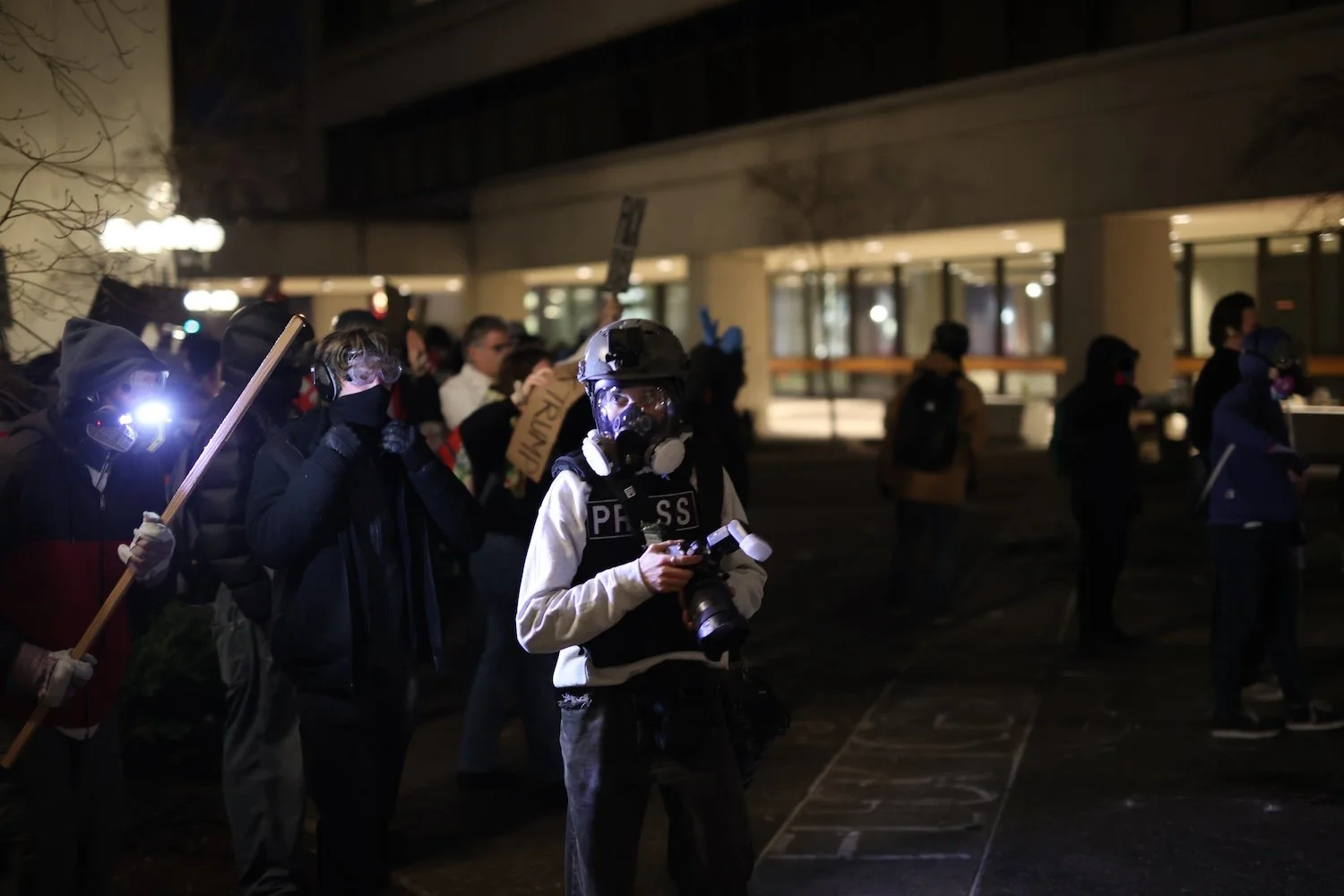
Saj Sundaram, a student journalist for the University of Oregon's Daily Emerald, covers protests in downtown Eugene in January 2026. (Courtesy of Robert Scherle)
Editor's note: The Student Press Report is a national news desk covering student media and journalism education in higher ed. It is supported by lead partners the Student Press Law Center and Flytedesk, with secondary support from the Associated Collegiate Press, the Association of University Student Media Managers, the College Media Business and Advertising Managers and CollegeJournalism.org.
Andrew Frazier was planning to spend his senior year as the sports editor of his student newspaper, The Vista at the University of Central Oklahoma.
Instead, he became editor-in-chief of a new student-run publication, The Independent View, after his university claimed a print version of The Vista wasn’t worth the $12,000 annual cost. (UCO’s annual operating budget in 2024-25 was about $177 million.)
When donors offered the cash and the university still said no, free press advocates shouted censorship. They said the UCO students were being punished for factual reporting that didn’t frame the university in a positive light.
“(This) raised serious press freedom questions for us,” he said. “Without a clear digital transition plan, the move felt less like modernization and more like retaliation, which is why we chose to build something independent.”
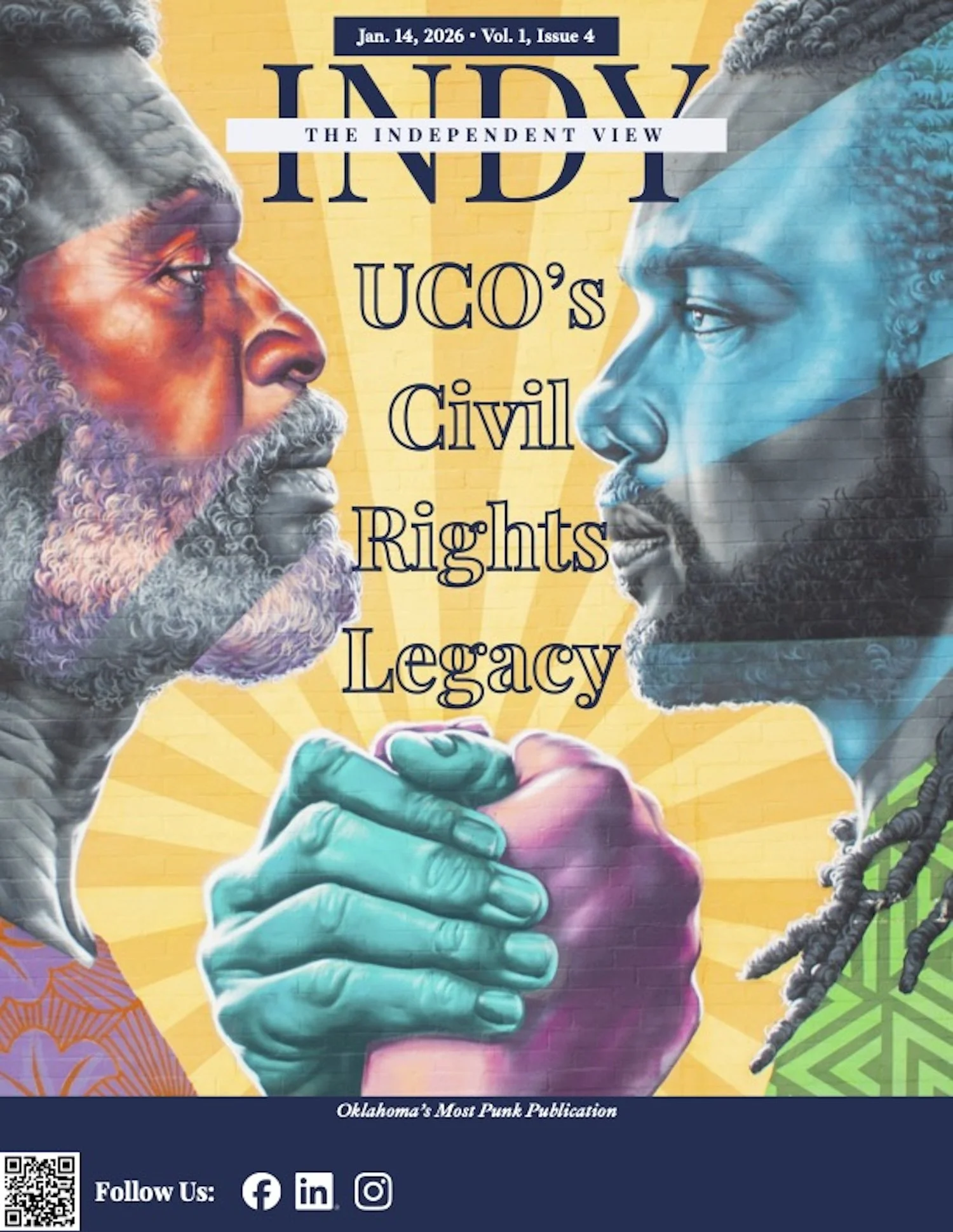
The cover of a recent Independent View issue.
For years, student press advocates have been frantically pointing toward the gathering clouds that gravely threaten college news organizations: money problems, censorship and disengaged campus audiences.
With a federal government that’s rewriting the rules on press freedoms and higher education, those clouds have become a perfect storm that’s rocking independent student media.
Silence is the point
The Student Press Law Center*, a 51-year-old nonprofit that defends and advances student journalists’ free press rights, said it’s seen an alarming uptick in calls over the past few years.
“Censorship has always been our No. 1 reason why people reach out to our legal hotline,” said Gary Green, executive director of SPLC. Calls for legal help went up 42% from the 2022-23 school year to 2024-25, he said.
One of several instigators of that surge was the March 2025 detention of Rümeysa Öztürk, an international student at Tufts University. Her “crime”? Writing a pro-Palestinian op-ed in The Tufts Daily. That and other immigration enforcement actions in spring 2025 sparked panic — and self-censorship — among sources and staff members.
In April 2025, SPLC issued a first-of-its-kind student media alert, urging students to “revisit their policies on takedown requests and anonymous sources, particularly for those whose immigration status may make them targets for their lawful speech.”
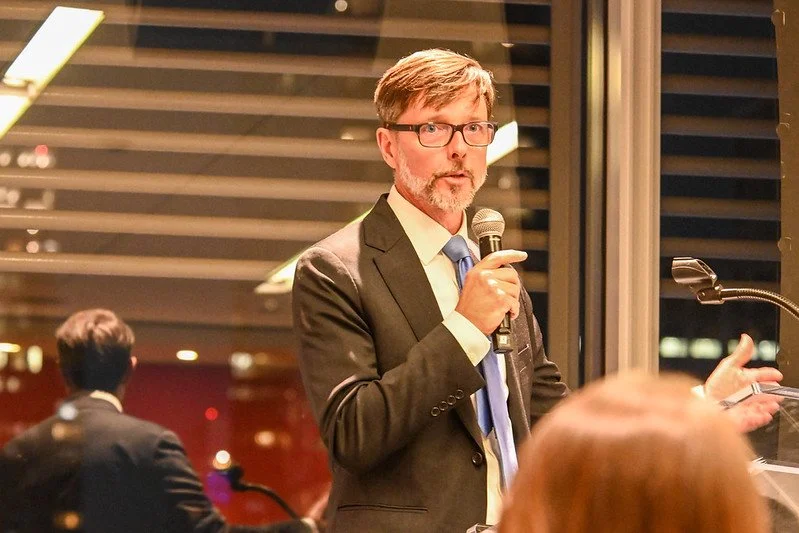
Student Press Law Center executive director Gary Green speaks at the SPLC 50th anniversary celebration at The New York Times in October 2024. (Photo by Ryan Murphy)
Among the censorship issues the student media world has faced recently:
Students started their own independent publication at the University of Texas at Dallas after the school removed newspaper racks, demoted their adviser and fired the editor-in-chief.
As outlined above, students at the University of Central Oklahoma created their own independent news publication after their print budget was killed and editors were stripped of decision-making power.
The University of Alabama shuttered two magazines that officials felt might conflict with federal DEI rollbacks.
Morgan State in Baltimore made an official policy requiring students, faculty and staff to run all interview and filming requests through the university’s public relations office.
Staffers at The Exponent newspaper at Purdue got a surprise email from the university stating that after a 50-year relationship, the university would no longer partner with distribution efforts on campus.
But the biggest student media news of 2025 came from one of the most awarded, respected student newspapers in the country.
In October, Jim Rodenbush was fired from what many would consider a journalism dream job — director of student media at Indiana University — after he refused to enforce an administrative mandate: no news content in the printed homecoming edition.
IU Media School dean David Tolchinsky wrote in Rodenbush’s termination letter, “Your lack of leadership and ability to work in alignment with the university's direction for the Student Media Plan is unacceptable.”
For years, financial shortcomings rattled IU’s student media — a familiar pattern at almost every student news organization in the country.
“I understood as things were building in the fall semester that I could be in trouble,” Rodenbush said from an interview in southern Illinois, where he’s living while looking for work.
So why did he risk — and ultimately end up losing — his job by refusing to censor his students?
“Because it was the right thing to do,” he said. “I feel like there's a responsibility to maintain standards and ethics, particularly in student journalism, because this is the future of the profession.”
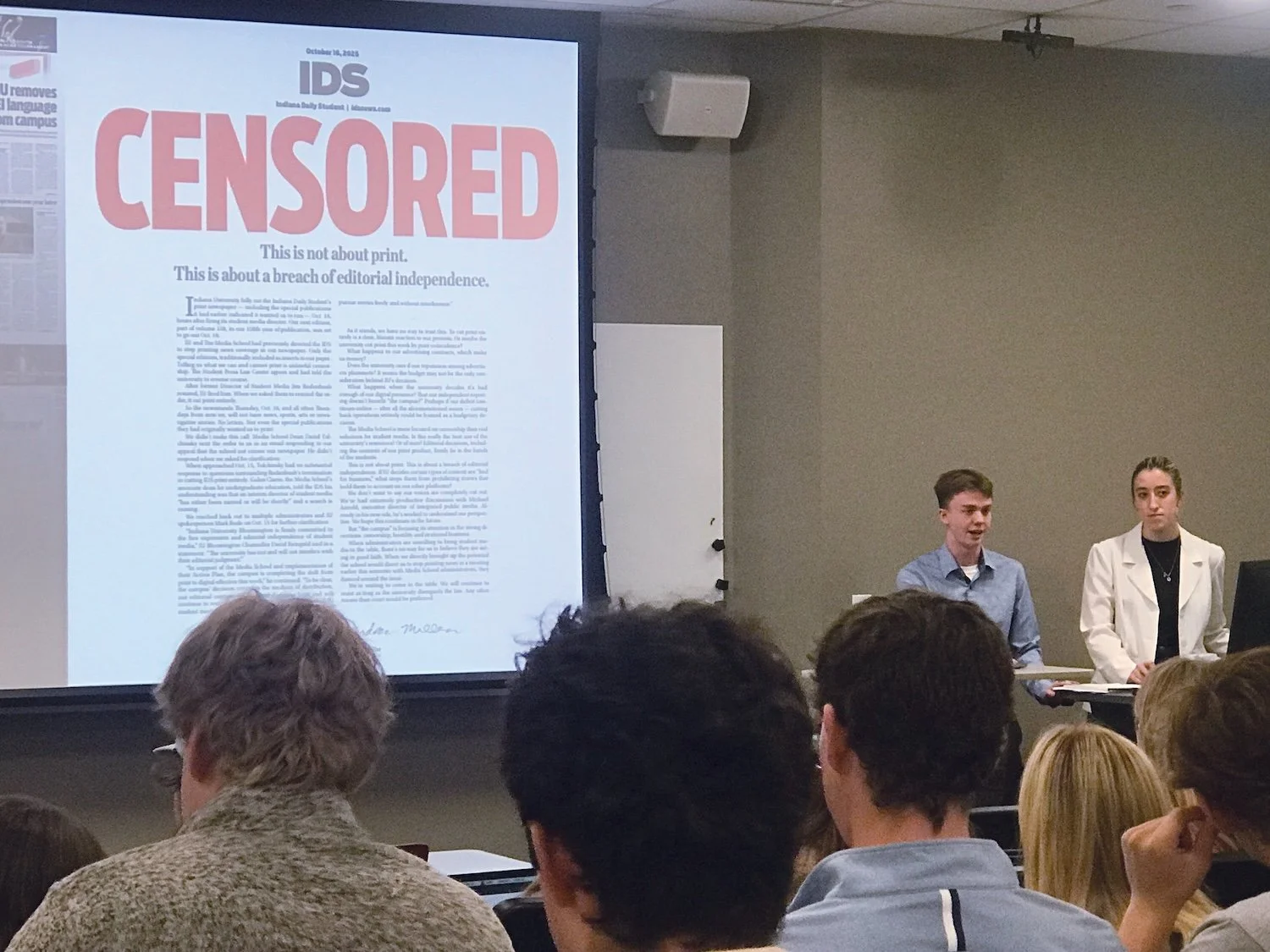
Indiana Daily Student co-editors in chief Mia Hilkowitz and Andrew Miller address their newsroom staff after the university fired student media director Jim Rodenbush and canceled the print production of the IDS. (Courtesy Indiana Daily Student)
IU Chancellor David Reingold later said that Rodenbush’s “personnel matter” and a “budget-related decision to pause printing of the IDS” gave the perception of censorship.
“Let me be clear: my decision had nothing to do with editorial content of the IDS,” he wrote in a letter to the editor published Oct. 30. “Indiana University has never attempted to censor editorial content, period. The IDS is, and remains, editorially independent.”
A task force was assembled at IU to develop recommendations “on the intersection of editorial and business operations” at IU student media.
Rodenbush filed suit against IU for violations of due process and free speech, and says he fears universities will continue to strong-arm student media.
“I have told people long before getting fired that I considered myself to be in service of journalism and in service of this to the students,” he said. “(My firing) would be a good illustration of that.”
Advisers across the country were outraged, but not necessarily surprised.
“I think Jim's firing is proof that we're all at risk,” said Steven Chappell, the newspaper adviser at Northwest Missouri State and a College Media Association Hall of Famer. “These colleges are going to continue to attack student media because they don't like what we report. They don't like it when there's been a sexual assault on campus and it's on Page 1, especially when it's campus visit day, and tours all over campus see the paper in their racks.”
SPLC’s Green said Rodenbush’s case is a great example of the journalism industry at large not realizing how tenuous things are in student media until they explode and grab headlines.
By then, it’s already too late.
“I think one of the biggest threats for student media, aside from censorship, is the financial model,” Green said. “A lot of student media are in the red, and really at an existential crisis. They're relying more and more on university subsidies, and universities, in many cases, are pulling their subsidies.”
Green said that universities might pull funding entirely, or they’ll soft-pedal small allocation reductions, chipping away at student news budgets year after year.
“The question from a censorship perspective is, is it because of content?” he said. “If it's because of content, it's unconstitutional, but it's really hard to prove that a university is cutting funding because they're upset with a story.”
Running on empty
“Gutted,” "eviscerated" and “absent” are some of the words student media leaders use to describe their operating budgets since the 2008 recession.
“We’ve lost entire categories of advertisers, we receive less revenue from our digital products than our print newspapers could bring in, and it’s much harder to compete with Google and social media platforms for new dollars,” said Chrissy Murray, CEO at Duke Student Publishing Company/The Chronicle.
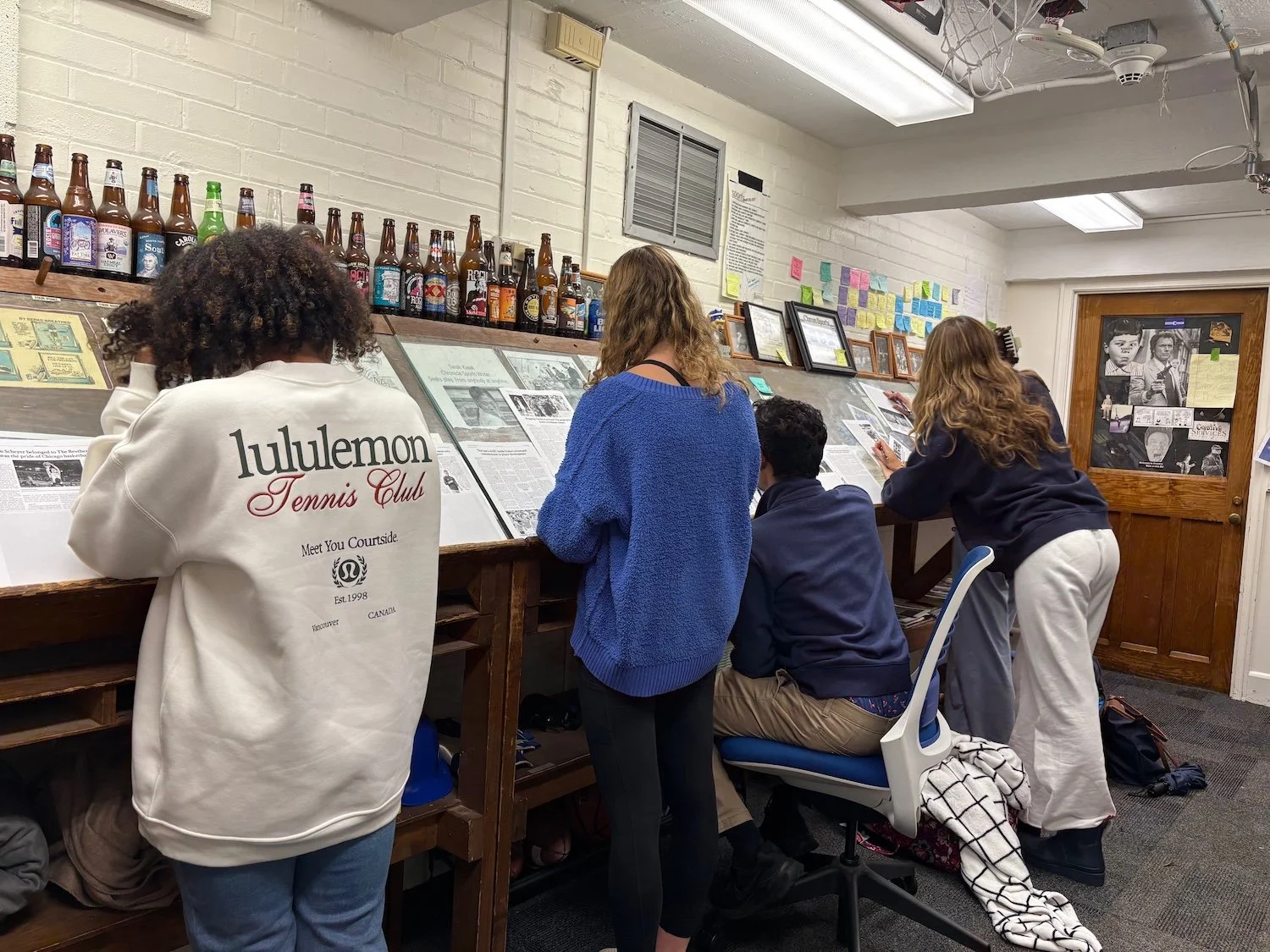
Student journalists atThe Duke Chronicle. (Courtesy Chrissy Murray)
Murray is the treasurer of the Association of University Student Media Managers*, an 82-year-old, members-only group of 36 prominent student media operations.
For decades, it has polled its members on financial aspects of their operations, sharing the data at a closed-door session at its annual conference.
Murray said that some college news organizations have found new revenue streams by creating communications projects that fit within their missions — things like content management and web services for other college media organizations and advertising and creative agencies, among other things.
She said that many nonprofit media organizations have leaned into philanthropy — fundraising and membership programs that focus on alums and loyal readers.
“We have all found ways to do more with less revenue that work for our individual organizations,” she said.
In 2024, the University of Florida’s Brechner Center for the Advancement of the First Amendment released a study examining the financial and editorial independence of college newsrooms. It looked at newspapers at four-year universities with enrollment of more than 5,000 students (about 512 verified outlets).
Among the study’s findings:
About 56% of student news outlets get “some sort of direct or allocated funding” from their parent university.
Almost 60% are advised by a university-paid faculty or staff member.
College news organizations saw bumps to their university allocations after the pandemic, and drops to their ad revenue.
“Financial ties to the institution can be problematic for student journalists for several reasons,” the study says. “Students who challenge the wrong person in administration are vulnerable to lose funding for their student press if there aren’t several safety guards in place.”
Lead author Jessica Sparks, now a professor at Auburn, said the concerns she wrote about two years ago seem even more pressing now.
“One of the biggest things that clicked for me… was the idea that there's no such thing as a truly independent institution in this realm,” she said. “Instead, what we're looking at is, how vulnerable are you as a publication to the pressure or censorship? And what can you do to mitigate that vulnerability?”
Around the same time as the Florida study, Penn State alums Bob Buday and Bill Guthlein crunched the available numbers on the nation’s 50 nonprofit student newsrooms using publicly available tax documents. The results shocked them:
Student newspaper advertising — once the dominant revenue source of student newspapers — dropped from 91% of total revenue in 2006-2007 to 52% in 2022-2023.
Average revenue fell 57% since 2007.
Advertising revenue fell 76%.
Buday said student media is contending with several structural disadvantages — high student turnover, university administrators cutting their funding, and a lack of best-practice research that keeps U.S. companies humming along.
“College media has not had the same thing,” he said. What successful student media often does have, however, is strong professional leadership, he said.
How to stay alive
At The Duke Chronicle, a housing site and robust fundraising have helped the paper stay afloat — thanks at least in part to the leadership of Murray, who said she believes it’s her job to look years down the road.
“(Student media) has lost a ton of revenue in the last 15 years because of print,” she said. “So few of us have refilled those buckets with other things, or we did it at a lower level. Now we're at a point where we're not sure if those buckets are going to hold in the economic downturn and what comes next. Then layer onto that the reader habits of undergraduates … Finding our audiences is going to be really complicated. And I don't know how many (college) news organizations are up for that challenge.”
Murray said one no-brainer revenue source is selling ads in an email newsletter. She’s also encouraged by the fundraising efforts — Duke’s now make up 30-35% of their student media’s annual operating budget.
Jake Williams, CEO of Illini Media Company at the University of Illinois, said the paper’s 501(c)(3) status means it’s mostly free from university oversight and was profitable last year for the first time in recent history. Keys to that financial success included cutting expenses; getting rid of outdated systems and processes in favor of simple, cheaper cloud-based options; and producing more meaningful and evergreen content.
“When your newspaper or news outlet is 150-some years old, there's a lot of stuff that you do because you've always done it,” he said. “And we really spent the last two years breaking as much of that down as possible and making sure that everyone had a clean path to just do what they were here to do.”
One huge focus was reimagining sales.
“One of the first things that we did was start to really emphasize campaigns and a year-long partnership with different businesses in town,” he said. Print growth followed — the paper now distributes 10% more on campus and 70% more off campus.
Gerald Johnson also hailed partnerships as a game-changer.
When Johnson took over Texas Student Media in 2014, he said it had been losing a quarter of a million dollars annually for years. Under his leadership, the department began experimenting and innovating for long-term sustainability. He reported 11 straight years of profitability by investing in partnerships, events and publications that might have seemed radical at first.
“If you're not making money and you're a strain on your campus, there certainly is the opportunity for more conversations about, ‘Why are you still here? Maybe you should go away,’” he said. “I think our stability has created some protection from those conversations.”
He’s sensitive to the fact that Texas Student Media is a huge and well-respected campus institution, and he has advice for smaller campus news organizations.
“Go out and network and tell your story, and get the stories of other people who are struggling on campus,” he advised. “Just in those conversations, you'll quickly figure out, ‘Well, hey, here's where you're struggling, and we could really help with that.’”
And don’t give up on advertising — it's still an important pillar in the overall financial health of student media, said Piper Jackson-Sevy, co-founder of Flytedesk*, the nation’s largest campus advertising network.
She said student media organizations with robust product offerings are still finding success with advertising.
“Student fees can vanish in a second, grants can be fickle, donors don't always come through,” she said. “The long-term financial health for student media means a healthy balance of several income sources.”
The Daily Nebraskan general manager Allen Vaughan advised figuring out what you’re good at beyond news and applying that to your business model.
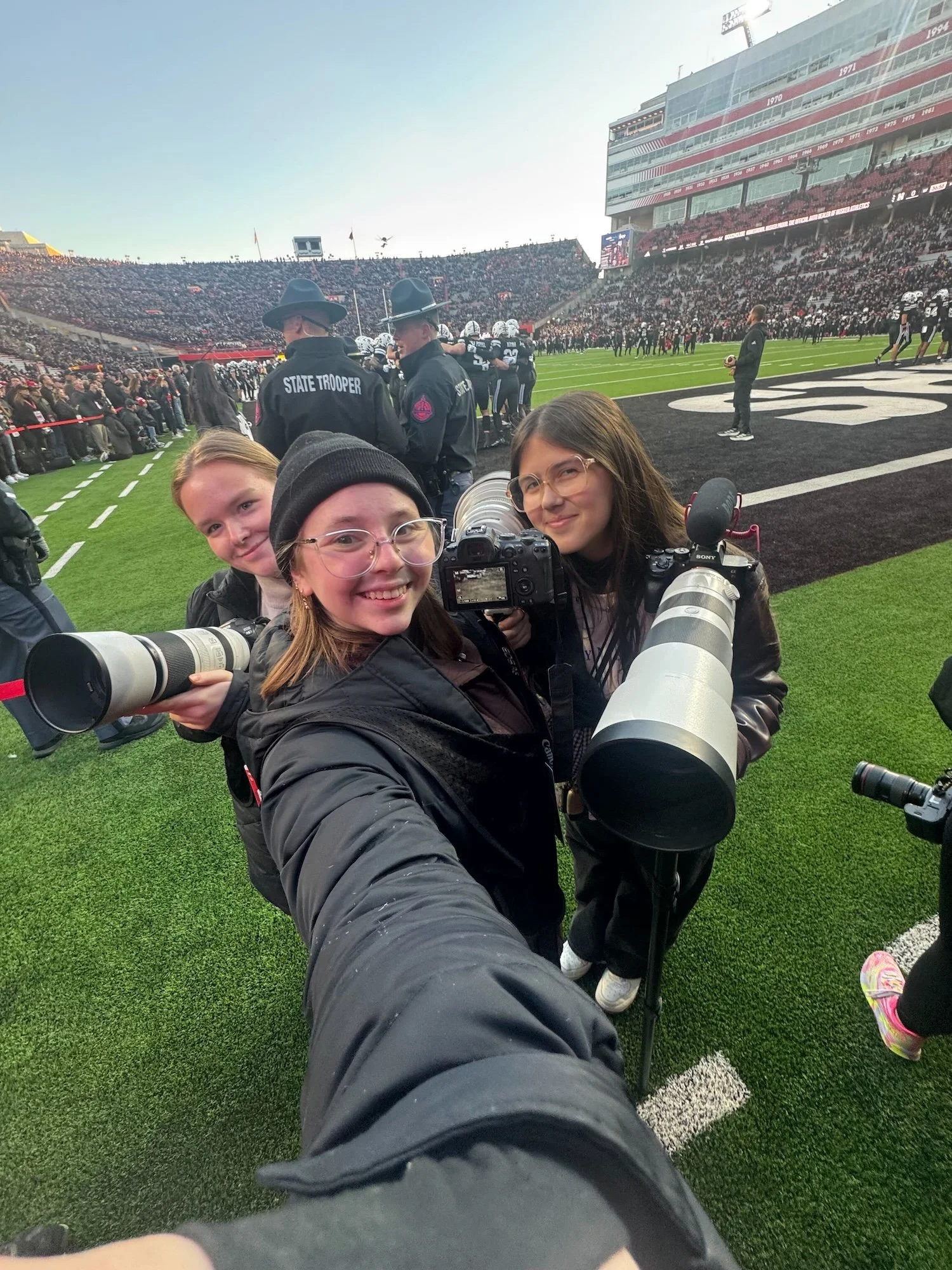
Student journalists Nina Kudlacz, Emma DeShon and Izzy Lewis on the field at Memorial Stadium at the University of Nebraska before a Huskers football game in 2025. (Courtesy The Daily Nebraskan)
“The largest category of our business in the last year, for the first time ever, was partnerships: working with other campus departments to sell advertising products for them,” he said. “That's just a core competency that we have … And so it's just a little bit of understanding how you fit in the ecosystem and how you can grow your footprint. The newsroom is the essence of everything that we're doing — we're just trying to figure out how to fund it.”
Why student newsrooms matter
College newsrooms are a unique American institution, a place for students to experiment, explore a career, find friends and mentors, and test their leadership skills.
“From day one, you're bonding with people from literally all walks of life, in a really cool space doing great work,” said Murray of Duke. “So it's this mission-driven kind of environment, but it's also just fun. I’m showing my bias here, but I don't think that there are leadership positions that have quite this much power in any other place on campus. That learning, and the responsibility, I think for some people it's one of the best experiences they'll have.”
For some advisers, the motivation to fight student media threats comes from their own positive experiences.
Community college — particularly the student media experience — was transformative for Sarah Bennett, a former student journalist who is now professor of journalism and media studies at Santa Ana College in Southern California.
“I didn't have stable housing, I didn't have parents really around. Guidance was not there in my upbringing, in my life, and Bud (Little, former Santa Ana adviser) was really the first adult and male figure in my life that was positive and healthy,” said Bennett, who has advised student media for the last 10 years. “I wouldn't be where I am if it wasn’t for him, and I see so much of myself in my students.”
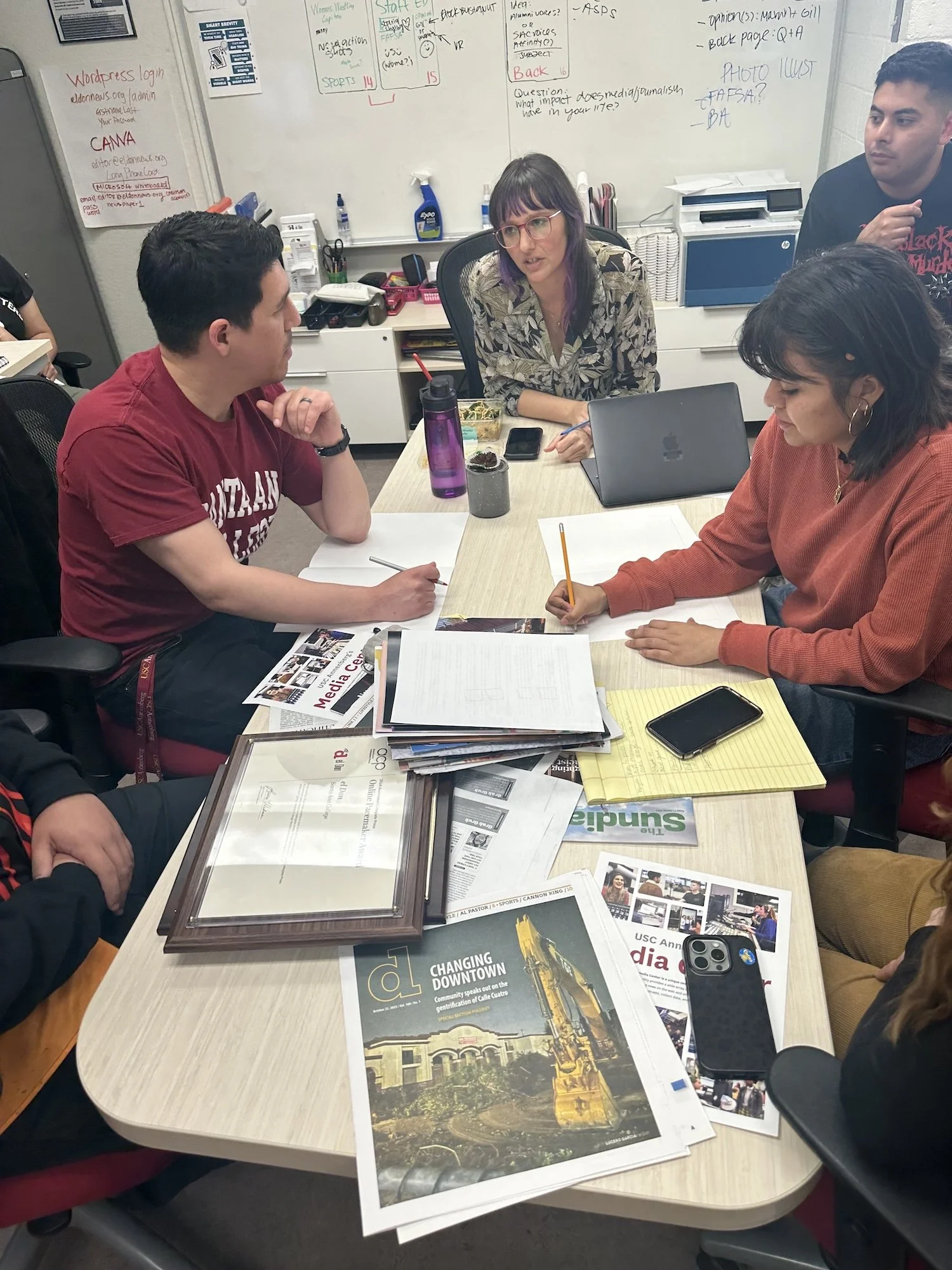
El Don adviser Sarah Bennett (center) works with students at Santa Ana College. (Courtesy el Don)
Chappell, who has been advising student media for more than 30 years, said he wants his students to understand their role in fighting back when democracy is under attack.
“The foundation of democracy is a strong media. And a strong media starts with strong student journalists who are excited about going into the field of media,” he said. “Without that, we're not going to survive. … It starts with the young people of this country having a passion for it. Their communication skills explode when they work for student media.”
Some students are feeling empowered to fight back. Lindsie Rank, director of campus rights advocacy at the Foundation for Individual Rights and Expression, said that seeing the headlines about protesters, journalists and others standing up for their rights can be inspiring for students.
“But, honestly, I'm afraid more students are scared into silence rather than empowered by the current climate,” she said, noting that FIRE's Student Press Freedom Initiative gets a lot of response from student journalists who are backing down out of understandable fear of reprisal. “Of course, we always encourage those journalists to reach out to folks like us, the SPLC, ACP, and alumni to make sure they know where their advocates are if something goes awry. But we also understand that it can feel like facing a giant when all you want is to earn your degree.”
A rounding error worth fighting for
Universities are in the business of subsidizing athletic programs, transportation, housing, the arts and lecture series, the SPLC’s Green said. Student media should not be an exception.
“The amount of university funds supporting student media in many cases accounts for no more than a rounding error in the overall budget,” he said. And it's a critical institution.
“Student media plays an integral role in our media ecosystem,” he said. “It's the pipeline for the future of journalism. People need to have a better understanding of the challenges of student media, and the more we get that news and information out to a broader audience, the more support we can cultivate for the great work the student journalists, their advisers and their faculty do.”
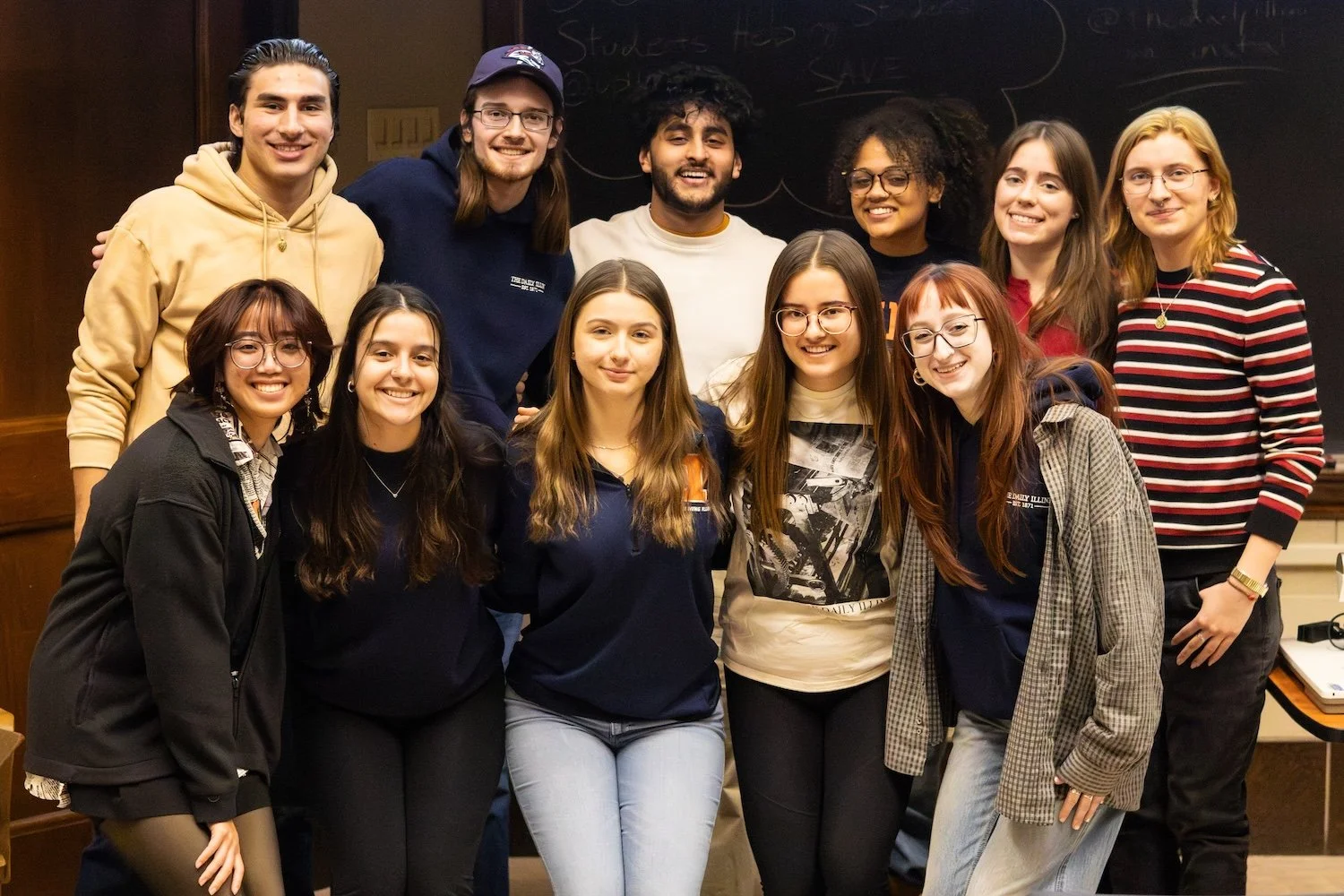
The Daily Illini editorial board at a recruitment event in 2026. (Photo by Sarah Slattery)
Williams, at The Daily Illini, said that while censorship and money are two huge issues facing student media, he thinks student media practitioners — both students and professionals — need to be thinking bigger and holistically about the role they play in society.
“Yes, let’s focus on the tactical. How do we stay in business? That's very important,” he said. “But also we need to be able to come together and say, ‘This is what we're doing, and we're here for this purpose,’ because the threats are only getting bigger.”
Barbara Allen is the founder and director of collegejournalism.org, which provides news coverage, training and consulting for student media and journalism educators. She is the editor of the Student Press Report and writes the weekly College Journalism Newsletter.
Disclosures/Correction
* The Student Press Law Center and Flytedesk are funders of the Student Press Report.
An earlier version of this story misspelled the name of a former University of Texas student media director. His name is Gerald Johnson, not Johnston.
