Despite threats to press freedom and sustainability, student journalists are working overtime to cover their campuses and communities

At Carnegie Mellon University, the Arm Wrestling Club meets at 5 p.m. Situationships are common at the University of Arkansas. At Barnard College, the pain of staff layoffs is still felt almost a year later.
And student journalists at the Argonaut at the University of Idaho have spent almost four years covering the murders of four Idaho students and the aftermath.
I know this because every morning I read a spreadsheet of the headlines of 870 student news organizations across the country, using an AI tool I created from RSS feeds and a database of college newspaper websites.
As a consultant and trainer dedicated to collegiate journalism and student media, I wanted to better understand what student journalists were doing at the most basic level, on a daily basis. So I vibe-coded a program to help me examine the significance of student journalists in communities and on campuses.
All told, I am monitoring 80% of the country’s college newspapers. (Check here to see if your school’s RSS feed is part of my research.)
What I’ve found is an encouraging wellspring of news, features, sports and multimedia that’s reassuringly broad and deep.
Despite threats to student media sustainability and challenges to press freedom, the collegiate press corps is alive and kicking — watchdogging universities, telling the stories of student life, and spotlighting what’s trending and concerning among college students in 2026.
A quarter million bylines
One of the most compelling data points for me is the sheer volume of work that students are generating daily: I’ve been reading, on average, about 800 headlines every workday, or about 25,000 bylines each month during the academic year.
Accounting for slow-downs during the school year, academic breaks and contributions from student newspapers that aren’t being read by my RSS feed, I estimate that student journalists will generate a quarter million bylines this year. (I have not yet accounted for original student photography, videography and podcasts that aren’t part of the RSS feeds, nor reporting at campus radio and TV stations.)
Some quick methodology: With help and funding from the University of Vermont’s Center for Community News, in the summer of 2025 I oversaw the build-out of a database of all the student newspapers in the country. Using previous data from SPJ and the Student Press Law Center, a team of students worked to verify or establish the presence of independent student newspapers at about 7,000 U.S. college campuses.
We identified about 1,100 independent campus newspapers that had done some form of original reporting over the previous year. That information was compiled into the Student Media Map, a terrific tool and the inspiration for the second phase of this research.
With the help of my AI tool of choice, Claude, I coded a program that tests for and reads the RSS feeds for all the papers we identified. About 870, or 80% of the entire list, have an RSS feed I can access.
I began coding and testing last fall, and started comprehensively collecting daily headlines Jan. 1. The RSS feed grab runs every 24 hours at 3 a.m. Pacific time, while I’m snoozing. The spreadsheets live on my hard drive.
At 9 a.m. daily, I pour my first cup of coffee, open up that day’s spreadsheet and find out what this nation’s future professional journalists are up to.
The sideline coaches
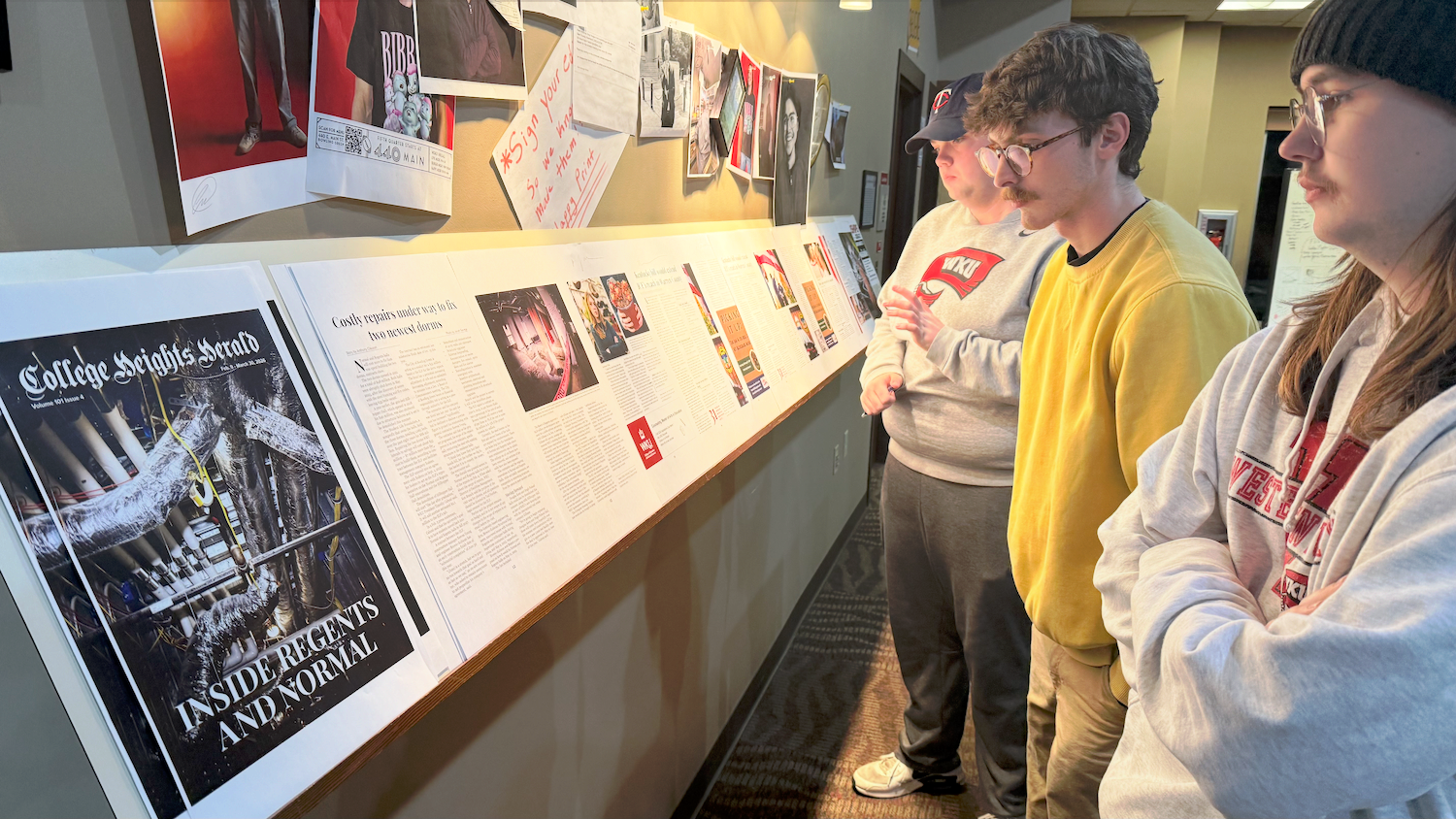
For more than a decade, Chuck Clark has been advising student journalists at Western Kentucky University. He said that his staff sees themselves as a crucial part of the local news ecosystem, and he observes it every day in their newsroom.
“Where five years ago, the newsroom was proud to publish one or two fresh news stories a day, today’s newsroom is far more energetic and immediate, pushing out a half dozen or more stories on many days of the week to fuel their daily newsletter and website,” Clark said. “In 2020, they were comfortable producing a weekly newspaper and a handful of web stories each week. Today, in many weeks, they will produce more than 50 stories across their digital platforms.”
Will Parchman, the director of student media at The University of Texas, said one explanation for all those bylines is that college journalists today are intently motivated to participate in the vital process of democracy.
“Our building buzzes every evening with budget meetings, filming sessions, podcast recordings, radio DJ sets, editing jousts and all the small steps that lead to big editions,” Parchman said. “I really believe there are no market conditions or world circumstances that can knock that missional axis off kilter, and that’s a reality we see every hour, every day.”
At The Ithacan, adviser Casey Musarra likes to say that student journalism is journalism — period.
“We’re fortunate to have multiple local news outlets, but The Ithacan covers Ithaca College like no one else can,” she said. “The students are providing an invaluable and unrivaled source of information to the college community. … It is mind-blowing to see how much content they’re creating week in and week out. While the print product comes out every other week, the website is updated daily.”
Students aren’t just the future of journalism, she said — they’re the present.
“This is a tumultuous time for the industry, and we need curious young journalists to carry the torch.”
What they’re writing, and how to follow
Reading through the headlines has given me much more insight into editorial decisions that student journalists make, as well as what’s important to college students nationwide.
It’s how I learned about campus pissers and performative male contests, as well as efforts to connect university leaders to the Epstein files. I know how busy the transfer portal keeps sports reporters and that there are Spanish translations of The State Hornet at Sacramento State, Weber State’s The Signpost and Western Kentucky’s College Heights Herald. Students are worried about gas prices, food insecurity, the impact of immigration enforcement and whether they’ll find a job.
It goes without saying that these bylines are rarely perfect, and that’s the point.
Student publications are learning labs and proving grounds. Not only are the students there learning how to produce news, in many cases they are supervising staff, training new journalists, making ethics decisions on deadline and trying to maintain the sustainability of their publication — all while (hopefully) attending classes and doing homework. I assume some of them even have time to call their parents, play video games and go out on dates.
Future work
Starting this week, I’ll share my favorite 10 examples of student media from the past week in my free newsletter and on my website. I’ll choose stories that are well-written, photographed or produced, as well as pieces that are interesting, creative and replicable at other campuses. My goal is to inspire students, professors and advisers about what’s possible in the realm of collegiate journalism.
Of course, if you have a great byline that you think deserves a place on the list, you can always email me a link to bob@collegejournalism.org.
Every day, I’m reminded of the value of college news organizations. Students working within independent university publications aren’t just learning about journalism. They’re experiencing the power and responsibility of publication. They are leaning into professionalism and providing information to their campuses and communities. They are making important discoveries about themselves, their capabilities and their future careers.
But most of all, they are contributing to the Fourth Estate and working hard every day to reach the democratic ideals of America’s free press.
And hopefully calling their parents occasionally.
Barbara Allen is the founder and director of collegejournalism.org, which provides news coverage, training and consulting for student media and journalism educators. She is the editor of the Student Press Report and writes the weekly College Journalism Newsletter.PreviousAs statehouse coverage shrinks, student journalists are stepping in to fill the voidNextOne student creator. 12,000 newsletter subscribers. Zero competition.

Leave a Reply