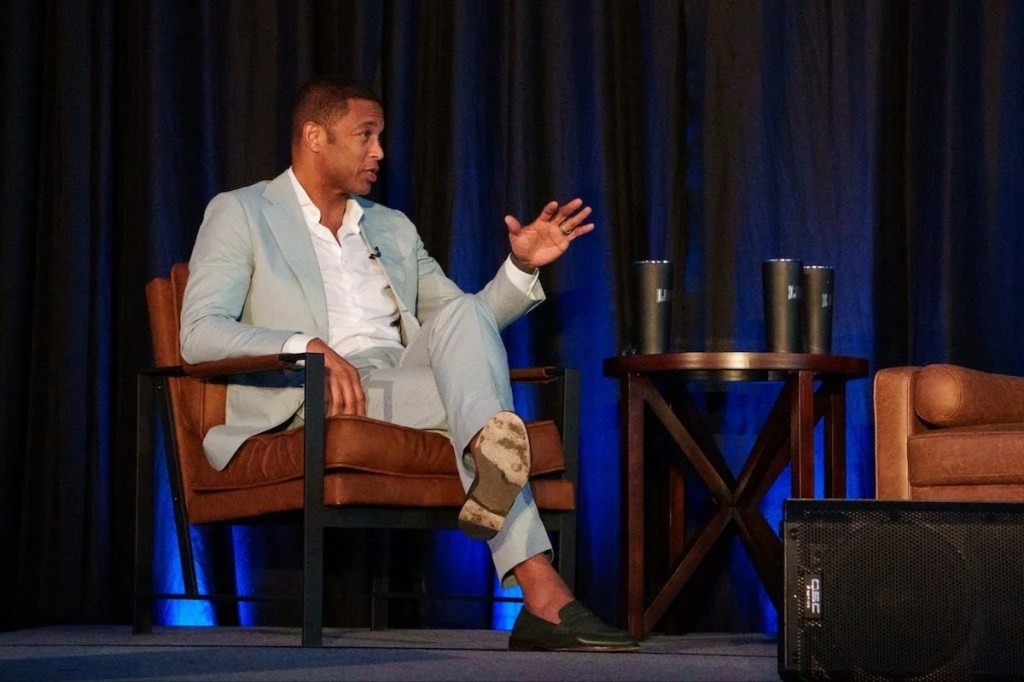
The former CNN anchor and independent journalist speaks about attacks on the free press while advising student journalists
Former CNN anchor and independent journalist Don Lemon hopes that his arrest will be an example of the sacrifices that journalists must be prepared to make — including being willing to fight for freedom of press nationwide.
“I wanted to be an example to other journalists, especially young people like you, that that’s part of what you must do: … Stand up to people who don’t respect our Bill of Rights and our Constitution,” Lemon said Wednesday to a crowd at Loyola Marymount University in Los Angeles, where he was the headliner of independent student newspaper The Loyolan’s First Amendment Week. “If you’re a journalist, you have to be willing to sacrifice safety and security in order to be able to bring people’s stories in an authentic (way).”
In January, Lemon became the focus of national attention when he was arrested, along with fellow independent journalist Georgia Fort, after reporting on an anti-ICE protest inside a church in Minnesota. Lemon was indicted by a Minnesota grand jury on charges of conspiracy and intimidation regarding religious freedom at a place of worship. Lemon pleaded not guilty to the charges Feb. 13.
Lemon has maintained since his arrest that he acted solely as a journalist — news can happen anywhere, including places of worship, he said during the panel, which I co-moderated with fellow student journalist Janai Williams.
His and Fort’s arrests, he said, not only set a dangerous precedent for journalists nationwide, but also highlight a prevalent divide between independent and legacy media — one that he believes is revealing what audiences truly want from journalism today.
“Everyone should be angry, especially people who happen to own places like CBS, ABC, NBC, even Fox, CNN … they should be outraged and they should be fighting against this administration every day, telling journalists to lean in and have a stronger point of view about what’s happening in this country,” Lemon said.
Before joining CNN in 2006, Lemon was a highly awarded journalist for his work as an anchor and reporter. Lemon quickly became one of the most recognizable faces in broadcast journalism during his time at CNN in part due to his unvarnished on-air political commentary. Lemon has long elicited strong opinions — notably, those of President Donald Trump — and has seen his reporting become news in and of itself, long before his January arrest.
After 17 years at CNN, chairman and CEO Chris Licht announced that the network had “parted ways” with Lemon, just over two months after Lemon’s on-air comments about Republican politician Nikki Haley had garnered significant controversy. Lemon, who characterized his 2023 departure from CNN as abrupt and a sign of “larger issues at play,” would pivot to independent reporting and commentary through his YouTube show, which now boasts over 1.2 million subscribers.
As an independent journalist, Lemon may not have the same institutional support that he did while at CNN, but he believes that since his departure he has been able to connect more closely with the subjects of his reporting. Independent media, he said, is emerging as a prevalent form of journalism as audiences are growing increasingly tired of legacy media institutions that report from a distance.
“I think that the companies who own … journalism institutions should stand up to the government because it’s our job,” he said. “Our job as journalists is to hold power to account, to expose corruption, to make sure that people who are not elected officials, who aren’t rich, who aren’t oligarchs, to make sure that they have a voice and a platform.”
Lemon said he wants to be immersed in the worlds he reports on by reporting from the inside — like interviewing people on the ground during protests.
“(Young people) want someone who is …close to the ground, telling the truth as they see it,” said Lemon.
Lemon’s enduring presence in the journalism world is in part due to nurturing his sense of curiosity, he explained. He interviews people he comes across on the street and focuses on “going to places where news is happening … and news happens sometimes in a church, or a synagogue, or a place of worship.”
He said people often think that “in order to be considered a real journalist, you have to have this sort of fake idea of what objectivity is. And what exactly is objective? Everybody has a point of view about life.”
Given that trust in media is at a record low nationwide, Lemon urged journalists to expand their perspective on objectivity and fairness. Individual points of view, he explained, are critical to maintaining trust between journalists and audiences.
“The news is also about the person who’s bringing it to you, especially if you are in the broadcast medium; it’s about the personality and the perspective,” said Lemon. “The news is important, but the person bringing you the news is also, I think, sometimes more important than just the news because there are different stories every single day. Every single moment there’s a different story.”
Lemon said audiences want their news delivered by someone who understands “exactly what a journalist should be: someone who’s vulnerable, who’s willing to make mistakes, who’s authentic.”
When asked for his advice to student journalists who are hoping to enter the professional world, Lemon’s focus was clear — “Perfection is boring.”
“Authenticity is key,” he said. “Being authentic means that you must have a real passion for what you’re doing, and if you do, people will see that.”
I have worked at The Los Angeles Loyolan since my freshman year at LMU and I recently concluded my time as editor-in-chief. Every year, the Loyolan brings a speaker to campus for a moderated conversation in celebration of our nationally treasured First Amendment rights, from the freedom of religion and assembly to press and protest.
With the help of my Loyolan advisor, Tom Nelson, we were not only able to bring in Lemon, but next week we are hosting Georgia Fort, a fellow independent journalist who was arrested following reporting on the church protest.
As a student journalist who aspires to enter the professional world after graduation, I felt that no other two speakers could encapsulate the importance of the free press and the ongoing struggle for journalistic freedom like Lemon and Fort. The opportunity to interview both of these individuals, inviting the student body to share in our learning about the current national state of journalism, is a highlight of my career.
If you work in student media and you have the opportunity to bring in a speaker, I would encourage you to consider the ways that learning from individuals fighting for press freedom can ignite passion and purpose in your students.
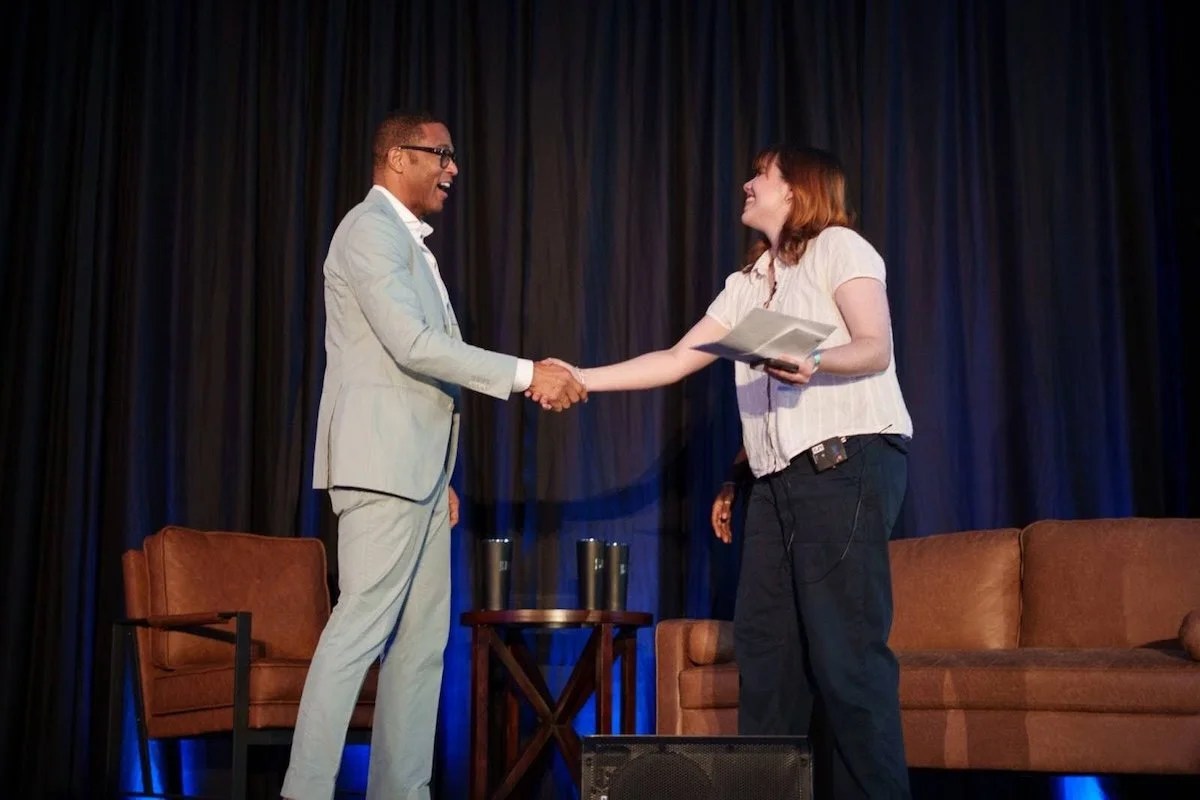
Olivia Silvester is a senior editor at The Los Angeles Loyolan, Loyola Marymount University’s student-run newspaper, where she recently completed her term as editor-in-chief. PreviousWhy I built a coalition for Philly’s student journalistsNextThese community college journalists are giving incarcerated students a voice

Leave a comment