A Scripps Howard fellowship at Chaffey College in California helps student journalists train and publish incarcerated writers.
In November, I was anxiously preparing for an interview unlike any other I’d conducted.
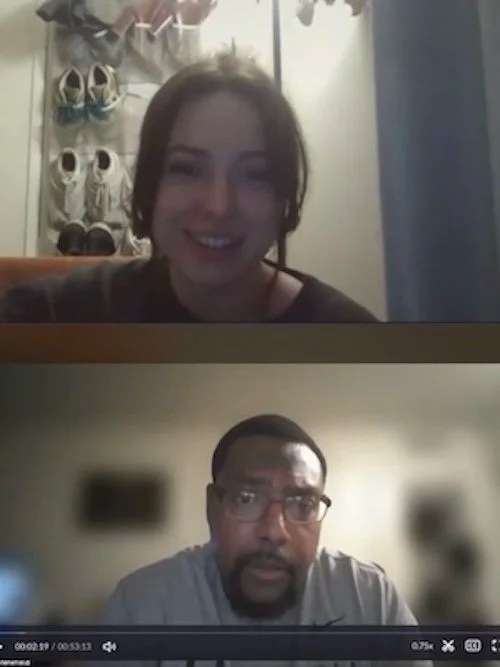
I sat nervously in my bedroom, staring into my laptop, when suddenly I was face-to-face with James Menefield, a participant in Chaffey College’s Rising Scholars program, which is designed to provide educational opportunities to incarcerated people.
Over email, he had been kind and eager to be interviewed after his release from the California Institution for Men in Chino, California. He credited Chaffey College — where we have both been enrolled — for changing his life.
It turns out, my nerves had been unnecessary — and my passion for carceral journalism was born.
Getting started, facing challenges
More than 20 years ago, Chaffey College began offering associate’s degree programs to the incarcerated men at the California Institution for Men and the neighboring women’s facility, the California Institute for Women. Since the Rising Scholar program’s inception in 2004, hundreds of degrees and certificates have been awarded to over 1,000 incarcerated students, according to the program’s website. Additionally, the students have a whopping 94% pass rate, compared to Chaffey’s overall graduation rate of 31%.
In August, my journalism professor and our newspaper’s faculty adviser, Ian Jones, began looking for four student fellows for a collaboration between incarcerated people and nonincarcerated student journalists.
Using a $15,000 grant from the Scripps Howard Fund, we worked with our professor to give incarcerated students a place to publish and the opportunity to develop their voices and reporting skills. It involved an “inside” and “outside” team — insiders were incarcerated, and outsiders were us fellows.
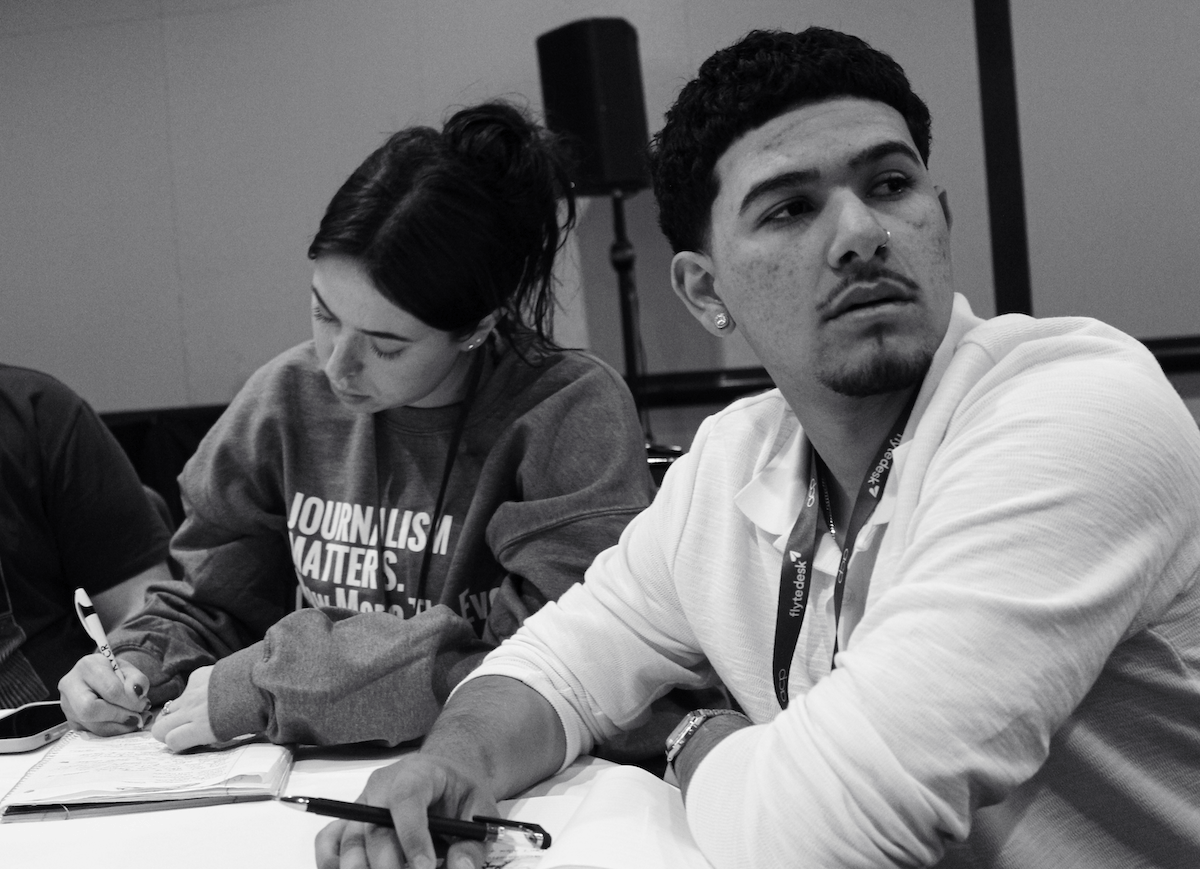
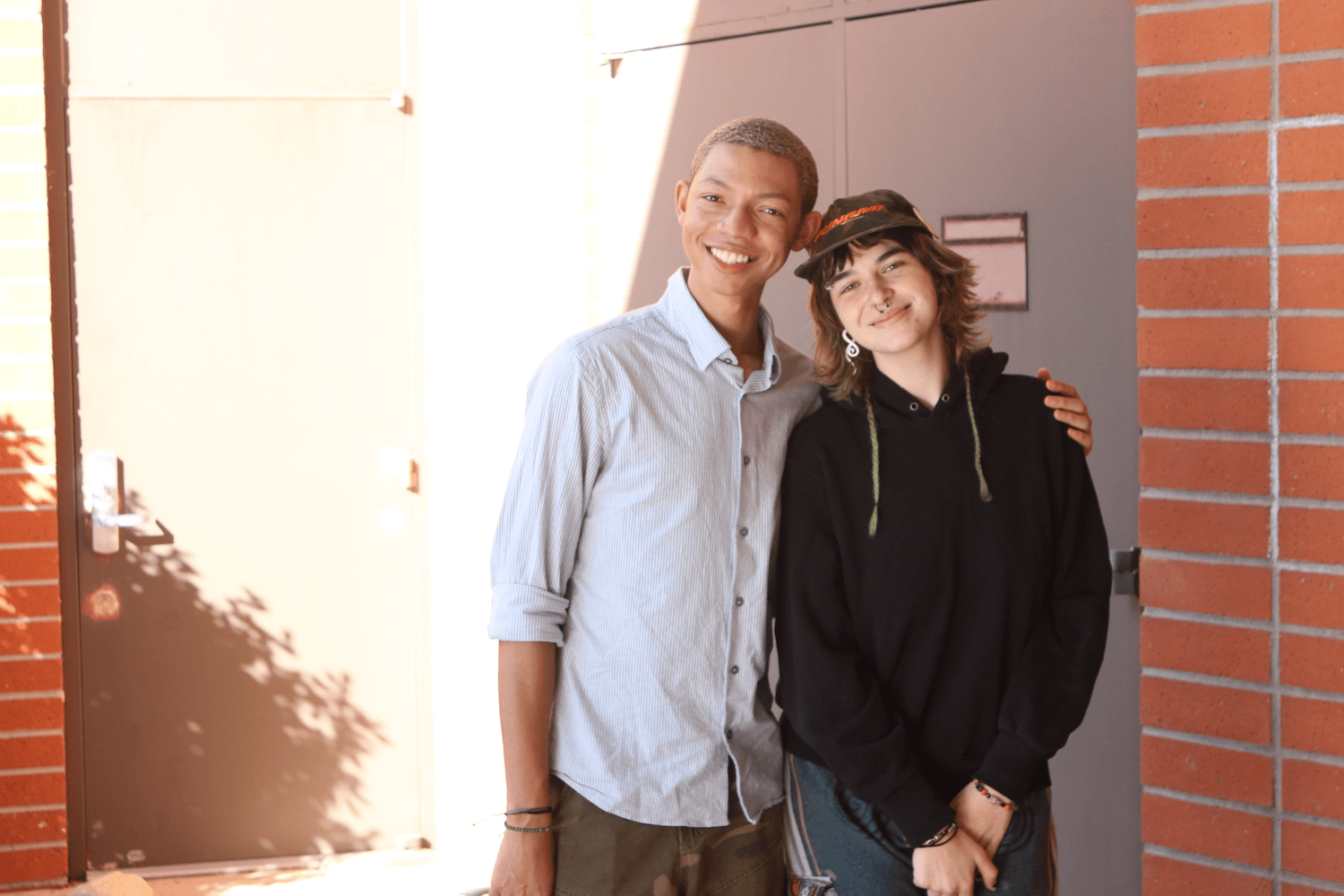
Jones chose four of us — Daniel Graham, Lionel Getten, Kaylee Fullington and me — to create a collaborative news network between the incarcerated journalists of the California Institution for Men and our school publication, The Breeze.
We lacked any related experience and found ourselves face-to-face with unique challenges that taught us to be creative, curious and persistent — making us stronger journalists with every obstacle. In attempting to build a newsroom-to-prison pipeline, we learned to explore aisles of communication we’d previously never imagined.
Our first roadblock (one that I now know is all too familiar to journalists working with incarcerated populations) came from a reticent public information officer.
“After multiple failed attempts of reaching out to the officer, I was forced to pivot towards a more responsive alternative,” said Getten, one of the fellows. But it worked out well, he said — he got better quotes and information directly from incarcerated journalists.
The fellows got lots of insight from Rising Scholars professors Jessica Moronez, associate professor of sociology and social justice, and Charmaine Phipps, professor of English as a second language. Through them, I was able to read previous student essays about reforms they would like to see in the facility, learn how to better communicate with current and former students, and obtain contact information for men on the inside and outside, including Menefield.
That allowed us to hand the mic to people who had something to say, rather than handing it to someone who decides what gets to be said.
Menefield taught me how much of an impact the Rising Scholars program made on his life. How kind the professors were. How his own confidence changed. While I understood the importance of the program, speaking with him gave me a whole new insight into the power of education within the carceral community.
Since being released from the California Institution for Men in late 2024, Menefield has continued his education through Cal State Los Angeles’ Project Rebound program. Project Rebound provides higher education opportunities to formerly and presently incarcerated individuals within the California State University network. Menefield is now the treasurer of a nonprofit and is a student worker for Cal State LA’s program. He also offers his own paralegal services.
What I learned from this experience
The insight and unique firsthand experiences that our team gained are not easily replicated in any other environment. As young journalists, we were challenged to step outside our comfort zones, increasing our confidence in exploring new territories. In such tumultuous times for journalism, this is a critical skill that will set us apart.
My experience with this program has changed the way I conduct interviews. As someone who had a habit of nervously filling moments of silence with useless words, I have learned that sometimes silence is golden.
Many of the individuals facing incarceration have long felt voiceless and unseen, even prior to their incarceration.
“There’s an anthropological concept of individuality trimming,” said Martin Garcia, manager of the Marshall Project’s News Inside initiative, about the treatment of incarcerated men and women inside facilities. “It’s ‘inmate,’ it’s ‘whatever labor’ — anything but calling you by your name, because it’s so much easier to oppress people when you don’t see them as a human.”
Using people-first language is huge in the incarcerated community. Referring to someone as a felon, convict or prisoner can be dehumanizing, reducing the person to solely their criminal past. Referring to the people who have served time by their names, other titles or as “incarcerated” tends to be the most appropriate. If you are ever unsure of a phrasing, a great resource is The Marshall Project’s language and resources guides.
It is also a best practice to avoid asking a source who has been or is currently incarcerated what crime they committed, unless it is pertinent to the article at hand. There is a lot of stigma around criminal pasts. I myself come from a family with previously incarcerated people, and have seen firsthand how the weight of that stigma for their past mistakes can be heavy. Many sources likely do not want their past mistakes to take precedence over any good they are hoping comes from your article. If they do choose to share that information with you, make sure to ask for permission before publishing.
Still, it’s important to be mindful of your own boundaries. It can be easy to have a lot of emotions when hearing people’s stories or circumstances, and it’s natural to want to help. Avoid becoming too personally involved in their lives, making promises you may not be able to keep or communicating inappropriately often — these are typically lines you should not cross.

“A better way you can support people in prison is to maintain a professional relationship,” said Yukari Kane, co-founder and CEO of the Prison Journalism Project, a nonprofit that teaches incarcerated people how to become journalists. “You’re giving them some training in how to work in a professional relationship. And that’s going to help them when they come home, because they’ll know how to work with people professionally.”
Why we do this work
Prison education and journalism programs actively work to lower the illiteracy rates in prisons. According to the National Center for Education Statistics, 29% of incarcerated adults have low literacy rates upon their entrance to prison, and up to 94% have a high-school education level or below. The value in reversing these rates often goes beyond mere journalistic education.
“If incarcerated people feel connected to the world through their journalism and they can practice professional skill development — through working with outside editors and the process of journalism, receiving feedback, modifying your work, that’s just going to help them get jobs and be successful,” Kane said . “If people in prison are able to make a life for themselves, then they’re less likely to come back.”
Findings from the Vera Institute of Justice suggest that college-in-prison programs can reduce recidivism rates drastically, by as much as 66%. Aside from reducing recidivism through education, journalism and prison collaborations provide valuable news to those incarcerated. Incarcerated persons often have limited informational resources, which can cause a strong disconnect to the outside world.
“You know, prisons and jails are arguably the biggest news desert in America,” Garcia said. “I find it hard-pressed, if you consider yourself a journalist, that you would not want to support something like this.”
Truly caring about the incarcerated populations and their experience is critical to reporting well on the topic. With a level of dedication and empathy, you will be able to ask better questions, gain access to more sources, and dive deeply into issues others may not know or consider worth reporting on.
Where we will go from here
Through my experience in this fellowship, I can already say that it is something any school can benefit from. At the end of this semester, we will have assembled a best practices guide for future fellows to use in their collaboration with the incarcerated journalists of the California Institution for Men. We already have a rapidly growing section of our student publication’s website dedicated to enhancing the voices of the men inside, and are seeing their pieces, on topics such as vocational opportunities and fair-wage advocacy, cross-published in multiple Pasadena publications.
While I can only attest to my experience with my school’s fellowship, we are not the only college pursuing this type of endeavor. UC Santa Cruz’s Humanities Institute had a collaboration with the Prison Journalism Project that allowed literature and journalism students to edit pieces from incarcerated journalists around the country. The University of Illinois provides educational opportunities for incarcerated journalism students at the Danville Correctional Center through their Education Justice Program.
Providing fellowship opportunities such as these teaches the journalists of tomorrow how to make real change in the world. We are learning to embrace discomfort, curiosity and challenges with open minds and laptops.
For folks like those in the California Institution for Men, that change can start somewhere as unassuming as a tiny-but-mighty community college newsroom.

Miranda Morgan is a student at Chaffey College in Rancho Cucamonga, California. She is the editor-in-chief of the school’s student-run publication, The Breeze. She will graduate in fall 2026 with an associate’s-for-transfer degree in journalism and hopes to use her degree to amplify the voices of marginalized communities, such as immigrants and incarcerated people.PreviousDon Lemon is ready to stand up for press freedoms — and he has some adviceNextCreator journalism comes to campus

Leave a comment